


Oak Tree
Oak Tree: Majestic Pillar of Temperate Forests
Taxonomy and Botanical Features
Historical and Cultural Significance
Medicinal Properties and Traditional Uses
Agricultural Applications
Modern Scientific Research
Environmental Impact and Sustainability
Economic Importance
Conservation Status and Future Prospects
Conclusion
Oak Tree Facts
Oak Tree Care
Oak Tree Timber Uses
Oak Tree Conservation
Oak Tree Medicinal Uses
Oak Tree Symbolism
Oak Tree Habitat
Oak Tree Growth Rate
Oak Tree Pruning
Oak Tree Acorn Production
Oak Tree Leaf Characteristics
Oak Tree Root System
Oak Tree Wildlife Habitat
Oak Tree Soil Requirements
Oak Tree Pest and Disease Management
Oak Tree Root Pruning
Oak Tree Indigenous Knowledge
Oak Tree Ethnobotany
Oak Tree Logging Practices
Oak Tree Cultural Heritage
FAQ
What is an Oak tree?
The Oak tree, scientifically known as Quercus, is a large, deciduous or evergreen tree belonging to the genus Quercus within the family Fagaceae. Oaks are renowned for their strength, longevity, and valuable timber, and they hold cultural, ecological, and economic significance worldwide.
01
Where are Oak trees commonly found?
Oak trees are commonly found in temperate and subtropical regions of the Northern Hemisphere, including North America, Europe, and Asia. They occur in diverse habitats ranging from forests and woodlands to savannas and grasslands, where they play vital roles in ecosystem functioning.
02
What are the characteristics of Oak trees?
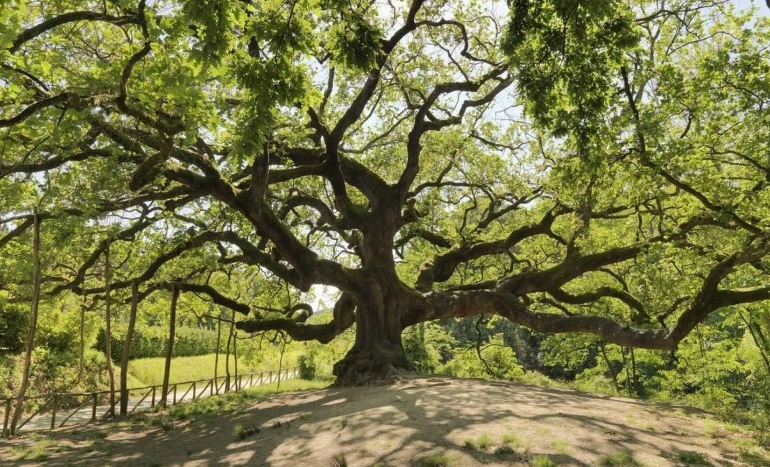
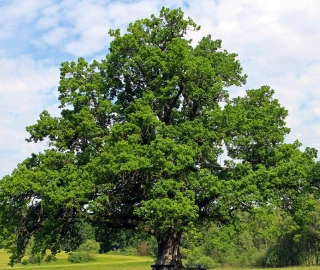
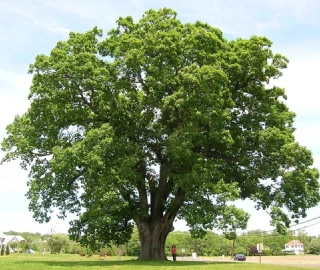
Oak trees are characterized by their sturdy trunks, broad crowns, and lobed leaves, which vary in shape and size depending on the species. They produce acorns, or nuts, enclosed in cup-like structures called cupules, which serve as important food sources for wildlife.
03
How tall do Oak trees grow?
Oak trees can vary widely in size, with some species growing as tall as 20-30 meters (66-98 feet) or more in favorable growing conditions. They have a strong, deeply rooted structure and develop a wide canopy, providing shade and habitat for a diverse range of organisms.
04
What is the scientific name of the Oak tree?
The scientific name of the Oak tree is Quercus, belonging to the family Fagaceae. The genus name "Quercus" is derived from the Latin word for "oak," while the species epithets distinguish between different Oak species, such as Quercus alba (white oak) and Quercus robur (English oak).
05
When do Oak trees bloom?
Oak trees typically bloom in spring, producing clusters of small, inconspicuous flowers that are wind-pollinated. The flowering period may vary depending on the species and local climate conditions, with some Oaks flowering earlier in the season than others.
06
How to care for Oak trees?
To care for Oak trees, plant them in well-drained soil in a location with full sunlight or partial shade, depending on the species. Provide regular watering, especially during dry periods, and mulch around the base of the tree to retain moisture and suppress weeds. Prune as needed to remove dead or diseased branches and promote healthy growth.
07
What are the benefits of planting Oak trees?
Planting Oak trees offers several benefits, including providing valuable timber for construction, furniture-making, and flooring, enhancing wildlife habitat with their acorns and foliage, and improving soil health through nutrient cycling and organic matter accumulation.
08
Are Oak trees suitable for urban environments?
Oak trees are well-suited for urban environments, where they provide shade, aesthetic value, and habitat for urban wildlife. They are often planted in parks, streetscapes, and green spaces, where their resilience and adaptability to urban conditions are appreciated.
09
How to propagate Oak trees?
Oak trees can be propagated from seeds or cuttings. Collect acorns from mature trees during the fall and sow them in containers filled with well-drained potting mix. Alternatively, take semi-hardwood cuttings from healthy, mature trees and root them in a rooting hormone solution.
10
What are the common pests and diseases affecting Oak trees?
Common pests affecting Oak trees include oak leafrollers, oak gall wasps, and oak borers, while diseases such as oak wilt, powdery mildew, and anthracnose can also occur. Proper monitoring and integrated pest management practices can help prevent and manage pest and disease problems.
11
Can Oak trees tolerate drought?
Most Oak trees have good drought tolerance once established, but they may require supplemental watering during prolonged dry periods, especially in their early years. Mulching around the base of the tree helps retain soil moisture and regulate soil temperature, promoting healthy growth.
12
How long does it take for an Oak tree to mature?
It typically takes several decades for an Oak tree to reach full maturity and attain its maximum height and canopy spread. However, Oaks are relatively slow-growing compared to some other tree species, and their growth rate may vary depending on species, growing conditions, and management practices.
13
Are Oak trees deciduous or evergreen?
Oaks can be either deciduous or evergreen, depending on the species. Many Oak species in temperate regions are deciduous, shedding their leaves in autumn, while some species in subtropical or tropical regions may retain their leaves year-round.
14
Can Oak trees be grown in pots?
While Oak trees can be grown in pots when they are young, they are not well-suited for long-term container cultivation due to their large size and extensive root system. They require ample space for root development and are best planted directly in the ground in a spacious, well-drained location.
15
What is the significance of Oak trees in landscaping?
Oak trees are prized in landscaping for their majestic form, beautiful foliage, and ecological value. They are often used as specimen trees, shade trees, or focal points in gardens, parks, and estates, where their presence adds beauty, biodiversity, and longevity to the landscape.
16
Are Oak trees invasive?
While Oaks are not typically considered invasive, some species may exhibit invasive tendencies in certain regions, particularly when introduced outside of their native range. Careful monitoring and management are necessary to prevent the spread of invasive Oak species and protect native ecosystems.
17
How do you prune an Oak tree?
Prune Oak trees in late winter to early spring before new growth emerges to remove dead or diseased branches, improve air circulation, and maintain shape. Use clean, sharp pruning tools and make cuts just outside the branch collar to promote rapid healing and minimize the risk of infection.
18
What is the lifespan of an Oak tree?
The lifespan of an Oak tree can vary depending on species, growing conditions, and management practices. In optimal conditions, some Oak species can live for several centuries, with some individual trees reaching ages of 300-500 years or more.
19
Are Oak trees protected species?
While Oak trees are not listed as protected species in most regions, they may be subject to conservation efforts and regulations aimed at preserving their ecological importance and cultural significance. Sustainable forest management practices and habitat preservation initiatives help ensure the continued existence of Oak trees and their valuable contributions to ecosystems worldwide.
20
Your Suggestions
Leave your message and we'll get back to you shortly.