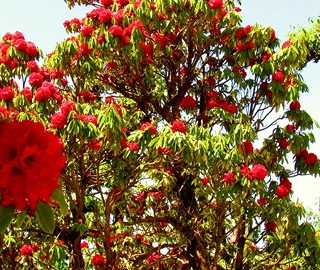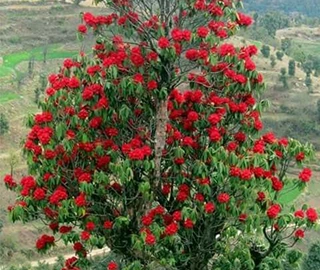

Buransh Tree: Scarlet Emissary of Himalaya
Aadusa Tree - Medicinal Plant

Buransh Tree: Scarlet Emissary of the Himalayas

In the pristine landscapes of the Himalayas, the Buransh Tree, scientifically known as Rhododendron arboreum, stands as a scarlet emissary, symbolizing Himalayan beauty and cultural heritage. This exquisite tree, adorned with vibrant scarlet flowers, not only graces the mountainous terrains but also holds deep cultural and ecological significance. Explore the enchanting world of the Buransh Tree, its vibrant qualities, cultural connections, and enduring legacy.

1. Common Name and Scientific Name

  • Commonly referred to as Buransh or Rhododendron.
  • Scientific name: Rhododendron arboreum.
  • Recognized for its distinctive scarlet flowers, revered across Himalayan regions.

2. Description

  • Evergreen or deciduous tree with large, leathery leaves.
  • Striking scarlet flowers bloom in clusters.
  • Thrives in temperate climates of the Himalayas.
  • Enhances the vibrant color palette of mountainous landscapes.

3. Habitat and Distribution

  • Adaptable to a variety of altitudes, often in temperate and subalpine zones.
  • Supports local flora and fauna, providing habitat for birds and small animals.
  • Contributes to the overall beauty of Himalayan ecosystems.

4. Ecological Importance

  • Nectar-rich flowers attract pollinators, supporting regional biodiversity.
  • Fallen leaves and flowers enrich soil fertility, enhancing ecosystem health.

5. Cultural and Historical Significance

  • Revered for its vibrant blossoms in Himalayan culture.
  • Associated with traditional festivals, local folklore, and religious ceremonies.
  • Scarlet flowers symbolize purity and are culturally significant.

6. Symbolism and Traditional Practices

  • Represents vibrancy, purity, and the essence of Himalayan beauty.
  • Used in rituals, traditional medicine, and as a symbol of local identity.
  • Embodies resilience and natural splendor in Himalayan landscapes.

7. Conservation and Sustainable Practices

  • Focuses on preserving Himalayan habitats and preventing deforestation.
  • Promotes sustainable land management and restoration of ecosystems.
  • Supports biodiversity and the sustainable use of this iconic species.

Conclusion

The Buransh Tree, with its scarlet blossoms and cultural heritage, stands as a symbol of Himalayan beauty and legacy. Its ecological and cultural significance highlights the importance of conservation, sustainable practices, and appreciation of the natural splendor of the Himalayas. In honoring the Buransh, we celebrate not just a botanical marvel but a living embodiment of the harmonious ties between culture, ecology, and enduring natural beauty.

Aadusa Tree Leaves - Medicinal Properties
Aadusa Tree Environmental Benefits

Buransh Tree: Scarlet Emissary of the Himalayas

Explore intriguing facts about the Buransh Tree, scientifically known as Rhododendron arboreum, celebrated for its vibrant flowers, medicinal properties, and cultural significance. Learn about its native range, ecological adaptations, and symbolic meanings.

Ecology

Buransh trees play a vital role in mountain ecosystems. They provide habitat and food sources for wildlife, stabilize slopes, and enhance soil fertility, contributing to ecosystem function and biodiversity conservation.

Habitat

Native to temperate forests, subalpine meadows, and mountain slopes, Buransh trees are adapted to high altitudes and cold climates. They support biodiversity and maintain ecological balance in mountainous environments.

Growth and Adaptations

Buransh trees exhibit compact growth forms and thick, leathery leaves to retain water. These adaptations allow them to survive harsh mountain conditions and thrive in challenging environments.

Cultivation

To cultivate Buransh trees in home gardens or arboretums, select suitable planting sites, provide protection from frost and winter winds, and ensure proper soil drainage and sunlight exposure.

Uses

Buransh trees are used for edible flowers, herbal teas, and traditional medicines. The bark and leaves also have applications in local crafts and remedies, sustaining cultural practices and livelihoods.

Economic Importance

Buransh tree products contribute to mountain economies through ecotourism, horticulture, handicrafts, and traditional medicine. They provide income while promoting sustainable livelihoods in local communities.

Environmental Benefits

Planting Buransh trees supports biodiversity conservation and watershed protection. They provide habitats for endangered species, regulate water flow, and prevent soil erosion, offering vital ecosystem services.

Medicinal and Culinary Uses

Flowers and leaves are used to treat respiratory ailments and incorporate nutrients into local cuisines. Buransh trees provide essential medicinal and culinary resources for mountain communities.

Conservation

Conservation efforts address habitat loss and climate change by promoting sustainable harvesting, establishing protected areas, and supporting community-based initiatives to safeguard Buransh populations.

Pest and Disease Management

Common threats include aphids, caterpillars, leaf spot, and powdery mildew. Integrated pest management practices help maintain tree health and prevent disease outbreaks.

Symbolism and Cultural Significance

Buransh trees symbolize beauty, resilience, and spirituality in mountain cultures. Associated with festivals and local deities, they hold profound cultural meanings and values.

Myths and Legends

Folklore surrounding Buransh trees includes tales of mythical creatures, heroic deeds, and natural wonders. These stories highlight the cultural and spiritual connection people have with this iconic tree.

Art and Crafts

Wood and fibers from Buransh trees are used in traditional handicrafts, including carvings, baskets, mats, and decorative items, preserving cultural heritage and artisanal skills.

Research and Education

Studies on Buransh trees focus on genetic diversity, pollination biology, and sustainable resource management. Educational programs raise awareness about conservation and ecosystem restoration.

Traditional Knowledge

Indigenous communities hold traditional knowledge about Buransh trees, including harvesting, ceremonial use, medicinal applications, and ecological wisdom passed through generations.

Climate Resilience

Buransh trees help regulate microclimates, provide shade, retain moisture, and support agroforestry systems, contributing to climate resilience and ecosystem stability in mountain regions.

Agroforestry and Ecotourism

Integrated into agroforestry systems, Buransh trees enhance soil fertility and water conservation. Ecotourism centered around Buransh landscapes offers immersive experiences while promoting sustainable tourism.

Global Distribution

While native to the Himalayas, Buransh trees are found in mountain ecosystems worldwide, including the Andes, Rockies, and Alps, symbolizing beauty, biodiversity, and resilience in high-altitude landscapes.

What is a Buransh tree?

The Buransh tree, scientifically known as Rhododendron arboreum, is a flowering evergreen tree native to the Himalayan region and parts of Southeast Asia. It is renowned for its striking crimson-red flowers that bloom abundantly in spring.

1

Where are Buransh trees typically found?

Buransh trees grow in temperate and subalpine forests of the Himalayas, including India, Nepal, Bhutan, and Myanmar. They thrive at elevations of 1,500 to 3,600 meters, forming dense thickets and providing wildlife habitat.

2

How tall can a Buransh tree grow?

Buransh trees can reach 15–25 meters in height, with a spreading crown and elliptical or lanceolate dark green leaves. They grow slowly, often taking several decades to reach maturity.

3

What climate do Buransh trees prefer?

They prefer cool, moist climates with mild summers and cold winters. Temperatures range from -10°C to 25°C, and annual rainfall exceeds 1,000 mm, with snowfall in higher elevations.

4

How long until a Buransh tree matures?

Buransh trees grow 20–30 cm per year under favorable conditions, taking 30–50 years to reach full height and produce abundant flowers.

5

How are Buransh trees propagated?

Primarily propagated through seeds from capsules produced by flowers. Seeds are dispersed by wind or animals and germinate in moist soil, enabling new growth and regeneration.

6

What are the uses of Buransh trees?

Used ornamentally in gardens and parks for vibrant flowers. Flowers are used in traditional beverages, jams, and syrups. Bark and leaves are utilized in local crafts and medicines.

7

Are Buransh trees resistant to pests and diseases?

Generally resistant but may face fungal infections (powdery mildew, leaf spot) or insect pests (aphids, scale). Proper care, pruning, and pest management ensure healthy growth.

8

What is the economic importance of Buransh trees?

Provides ecosystem services like soil stabilization, watershed protection, and wildlife habitat. Supports ecotourism, traditional medicine, and cultural activities in mountain communities.

9

Can Buransh trees be grown in gardens or urban landscapes?

Yes, as ornamental trees in gardens and parks. They require cool, moist climates, well-drained soil, and mild summers with cold winters.

10

What environmental benefits do Buransh trees provide?

They stabilize soil, support biodiversity, sequester carbon, and provide critical habitat for wildlife, contributing to ecosystem resilience.

11

What is the cultural significance of Buransh trees?

In Himalayan cultures, Buransh trees symbolize beauty, renewal, and vitality. They are part of festivals, rituals, and folklore, representing life cycles and spiritual significance.

12

Are there different species of Buransh trees?

Yes, multiple species and subspecies exist within the Rhododendron genus, differing in flower color, leaf shape, and habitat preferences. Varieties are adapted to specific climates and cultural uses.

13
logo
back top