


Amla Tree
Amla Tree: Unlocking the Treasures of Nature's Wellness Elixir
Botanical Marvel
Nutritional Powerhouse
Medicinal Properties
Culinary Delight
Cultural Significance
Ecological Role
Economic Importance
Traditional Uses
Agroforestry Benefits
Climate Resilience
Conservation Challenges
Sustainable Management
Community Empowerment
Research and Innovation
Conclusion
Amla Tree Facts
Amla Tree Ecology
Amla Tree Habitat
Amla Tree Growth and Adaptations
Amla Tree Cultivation
Amla Tree Uses
Amla Tree Economic Importance
Amla Tree Environmental Benefits
Amla Tree Medicinal Uses
Amla Tree Conservation
Amla Tree Pest and Disease Management
Amla Tree Symbolism and Cultural Significance
Amla Tree Myths and Legends
Amla Tree Art and Crafts
Amla Tree Research and Education
Amla Tree Traditional Knowledge
Amla Tree Climate Resilience
Amla Tree Agroforestry
Amla Tree Ecotourism
Amla Tree Global Distribution
FAQ
What is an Amla tree?
The Amla tree, scientifically known as Phyllanthus emblica, is a deciduous tree native to the Indian subcontinent and Southeast Asia. Revered for its nutritious and medicinal fruit, known as Indian gooseberry, the Amla tree holds cultural, culinary, and medicinal significance in traditional Indian Ayurvedic medicine.
01
Where are Amla trees commonly found?
Amla trees are commonly found throughout the Indian subcontinent, including India, Nepal, Sri Lanka, and Bangladesh. They also occur in other parts of Southeast Asia and are cultivated in tropical and subtropical regions worldwide for their fruit and medicinal properties.
02
What are the characteristics of Amla trees?
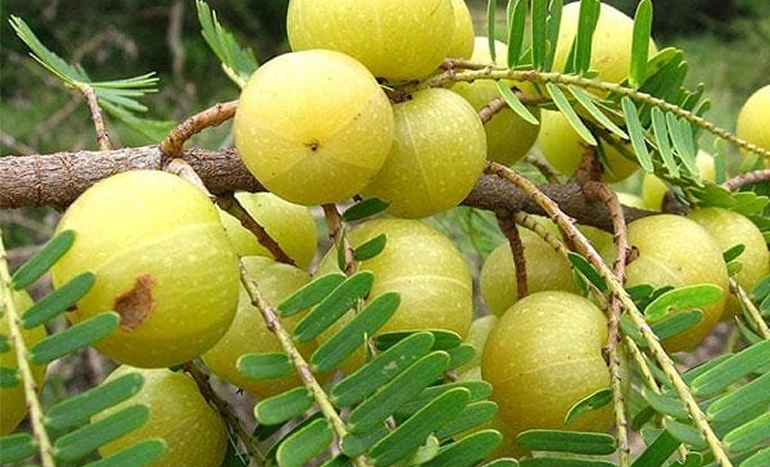
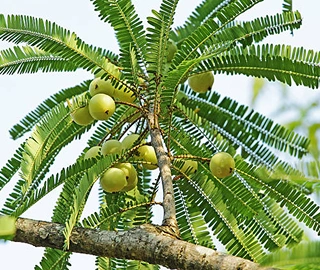
Amla trees are characterized by their slender branches, small, light green leaves, and small, round fruits with a light green to yellowish color when ripe. They have a relatively short trunk and develop a dense, bushy canopy, providing shade and habitat for wildlife in their native habitats.
03
How tall do Amla trees grow?
Amla trees typically grow to heights of 5-8 meters (16-26 feet) in favorable growing conditions. They have a spreading canopy and dense foliage, which helps protect the delicate fruit from sunburn and provides habitat for birds and other animals.
04
What is the scientific name of the Amla tree?
The scientific name of the Amla tree is Phyllanthus emblica, belonging to the family Phyllanthaceae. The genus name "Phyllanthus" is derived from the Greek words "phyllon," meaning leaf, and "anthos," meaning flower, referring to the arrangement of flowers and leaves in the genus.
05
When do Amla trees bear fruit?
Amla trees typically bear fruit in late summer to early autumn, depending on the species and local climate conditions. The fruit ripens gradually, changing color from light green to yellowish-green or reddish-brown when fully ripe, and can be harvested for consumption or processing.
06
How to care for Amla trees?
To care for Amla trees, plant them in well-drained soil in a location with full sunlight or partial shade. Provide regular watering, especially during the growing season, and fertilize annually with organic or balanced fertilizer to promote healthy growth and fruit production.
07
What are the benefits of planting Amla trees?
Planting Amla trees offers several benefits, including providing nutritious and medicinal fruit rich in vitamin C and antioxidants, enhancing soil fertility through leaf litter and root exudates, and supporting biodiversity by providing habitat and food for wildlife.
08
Are Amla trees suitable for urban environments?
Amla trees are well-suited for urban environments, where they provide shade, beauty, and food for both people and wildlife. They are often planted in parks, gardens, and public spaces, where their resilience and adaptability to urban conditions are appreciated.
09
How to propagate Amla trees?
Amla trees can be propagated from seeds, cuttings, or air layering. Collect ripe Amla fruits and extract the seeds, then sow them in containers filled with well-drained potting mix. Alternatively, take semi-hardwood cuttings from healthy, mature trees and root them in a rooting hormone solution.
10
What are the common pests and diseases affecting Amla trees?
Common pests affecting Amla trees include aphids, scale insects, and fruit flies, while diseases such as powdery mildew, leaf spot, and root rot can also occur. Proper monitoring and integrated pest management practices can help prevent and manage pest and disease problems.
11
Can Amla trees tolerate drought?
Amla trees have good drought tolerance once established but benefit from regular watering during dry periods, especially during the fruit development stage. Mulching around the base of the tree helps retain soil moisture and suppress weeds, promoting healthy growth and fruit production.
12
How long does it take for an Amla tree to mature?
It typically takes several years for an Amla tree to reach full maturity and start bearing fruit. However, some Amla varieties may produce fruit within 3-5 years of planting, while others may take longer depending on growing conditions and management practices.
13
Are Amla trees deciduous or evergreen?
Amla trees are typically deciduous, shedding their leaves in response to environmental cues such as changes in temperature and daylight. However, in some tropical regions with consistent climate conditions, they may retain their leaves year-round.
14
Can Amla trees be grown in pots?
Amla trees are well-suited for container cultivation, especially in regions with colder climates where they can be moved indoors during winter. Choose a large container with drainage holes, fill it with well-drained potting mix, and place the tree in a sunny location for optimal growth and fruit production.
15
What is the significance of Amla trees in landscaping?
Amla trees are prized in landscaping for their ornamental value, culinary potential, and medicinal properties. They are often used as specimen trees, hedge plants, or focal points in gardens, parks, and orchards, where their multipurpose nature adds beauty and functionality to the landscape.
16
Are Amla trees invasive?
Amla trees are not considered invasive in most regions, as they are native to the Indian subcontinent and have been cultivated for centuries for their fruit and medicinal properties. However, they may spread and naturalize in favorable growing conditions, particularly in tropical and subtropical habitats.
17
How do you prune an Amla tree?
Prune Amla trees in late winter to early spring before new growth emerges to remove dead or diseased branches, improve air circulation, and maintain shape. Use clean, sharp pruning tools and make cuts just outside the branch collar to promote rapid healing and minimize the risk of infection.
18
What is the lifespan of an Amla tree?
The lifespan of an Amla tree can vary depending on species, growing conditions, and management practices. Generally, Amla trees can live for several decades, with some specimens surviving for over 50 years under optimal conditions.
19
Your Suggestions
Leave your message and we'll get back to you shortly.