


Kadamba Tree
Kadamba Tree: Love, Legends, and Environmental Legacy
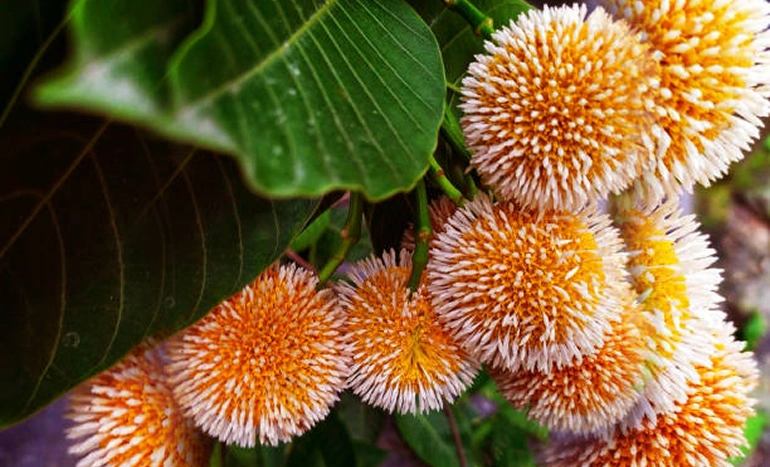
The Enchanted Love Story of the Kadamba Tree
Radha and Krishna: Love in the Shade of Kadamba
Environmental Significance of the Kadamba Tree
Preserving the Legacy of the Kadamba Tree
The Environmental Emblem
Ecological Significance
- Habitat Provider: The Kadamba tree offers shelter and habitat to a wide range of fauna, including birds, insects, and small mammals. Its dense canopy provides a safe haven for nesting birds.
- Floral Diversity: The tree's fragrant, globe-shaped flowers attract a multitude of pollinators, including bees and butterflies. This contributes to the pollination of other plant species in the ecosystem.
- Fruitful Bounty: The Kadamba tree produces small, orange fruit, which serves as a vital food source for several animal species, enhancing the food web's complexity.
- Soil Enrichment: Kadamba leaves, when they fall and decompose, enrich the soil with nutrients, supporting the growth of other plant species in the vicinity.
Indian Habitat
- Western Ghats: Kadamba is commonly found in the Western Ghats, a UNESCO World Heritage Site known for its biodiversity. It is an integral part of the lush forests that cover the Ghats, contributing to the region's ecological balance.
- Eastern Ghats: In the Eastern Ghats, the Kadamba tree continues to grace the landscape with its beauty and ecological significance.
- Central India: States like Madhya Pradesh, Chhattisgarh, and parts of Maharashtra are home to the Kadamba tree, where it thrives in the region's diverse ecosystems.
- Southern India: Kerala, Karnataka, and Tamil Nadu also host the Kadamba, further enriching the ecological diversity of these states.
- Northern Plains: Even in the northern plains, states like Uttar Pradesh and Bihar have pockets where the Kadamba tree thrives, often near riverbanks and water bodies.
Kadamba Tree Mythology
Ecological Significance of Kadamba Tree
Cultural Significance of Kadamba Tree
Distribution of Kadamba Tree in India
Conservation Efforts of Kadamba Tree
FAQ
What is the scientific name of the Kadamba tree?
Scientifically, the Kadamba tree is known as Neolamarckia cadamba.
01
Where is the Kadamba tree predominantly found in India?
The Kadamba tree thrives in various Indian states, including Karnataka, Maharashtra, West Bengal, and Uttar Pradesh. It is particularly abundant in the Western Ghats and the Eastern Himalayan region.
02
Why is the Kadamba tree a favorite of Lord Krishna?
The Kadamba tree is renowned for its sweet-scented, globe-shaped flowers. These fragrant blooms are said to have captivated Lord Krishna, who was drawn to their heavenly aroma. The Kadamba tree is often associated with the divine love between Lord Krishna and Radha. It is believed that the dense canopy of Kadamba trees provided an ideal and secluded setting for the divine lovers to engage in their romantic dalliances.
03
What ecological significance does the Kadamba tree hold?
The Kadamba tree plays a vital ecological role by providing shelter and food for numerous wildlife species. Its fragrant flowers attract pollinators, aiding other plants in reproduction, while its fruit serves as sustenance for various animals.
04
What is the cultural and mythological importance of the Kadamba tree?
The Kadamba tree is deeply associated with Lord Krishna and Radha's divine love story. It is believed that they conducted their celestial love play in the welcoming shade of the Kadamba.
05
How tall can a Kadamba tree grow?
Kadamba trees can reach impressive heights, ranging from 15 to 30 meters (50 to 100 feet).
06
What are the traditional uses of the Kadamba tree?
The Kadamba tree has a rich history of traditional uses. Its timber is employed for making various items, such as agricultural tools, furniture, and musical instruments.
07
Do Kadamba trees have any medicinal properties?
Yes, various parts of the Kadamba tree, including its bark and leaves, have been used in traditional medicine for their potential therapeutic properties.
08
How does the Kadamba tree contribute to the environment?
Kadamba trees contribute significantly to air quality by releasing oxygen. They also help in soil conservation by preventing erosion with their extensive root system.
09
Can I grow a Kadamba tree in my garden?
If you reside in a region where the Kadamba tree thrives, you can certainly consider planting one in your garden. However, make sure to provide the tree with adequate space and suitable soil conditions.
10
Is the Kadamba tree protected by any conservation efforts?
While not specifically protected, the Kadamba tree benefits from broader conservation efforts focused on preserving India's biodiversity and forests.
11
Your Suggestions
Leave your message and we'll get back to you shortly.