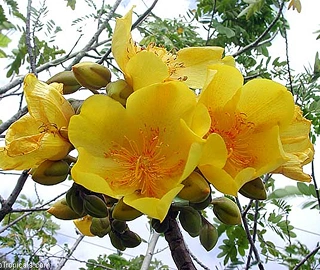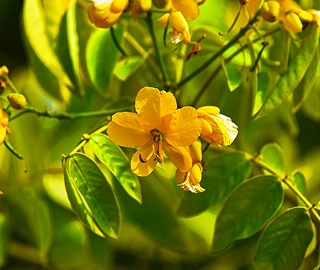

Buttercup Tree: Unveiling the Secrets of Nature's Hidden Gem for Your Garden
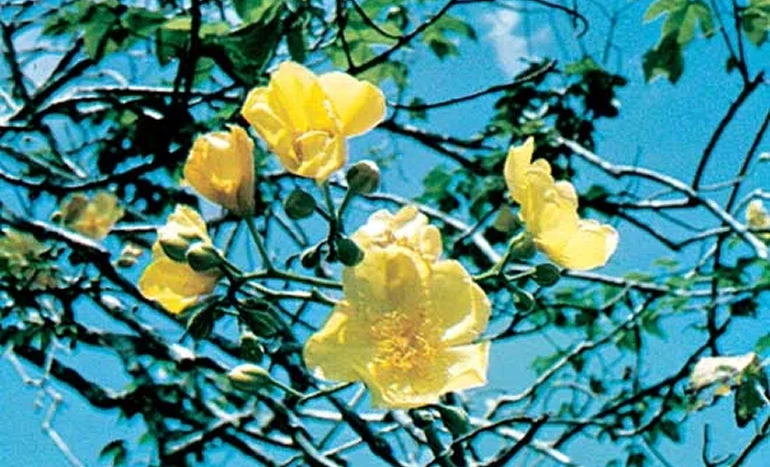
Aadusa Tree - Medicinal Plant

Burma Padauk: Nature’s Golden Superstar

The Burma Padauk (Pterocarpus indicus) is a tropical tree native to Southeast Asia, celebrated for its brilliant golden-yellow flowers and durable wood. Revered for its beauty, the Padauk has long been a cultural symbol of prosperity in Myanmar, associated with religious and traditional ceremonies. Its flowers attract bees and butterflies, supporting pollination, while its dense foliage provides shade and shelter for birds, insects, and small mammals.

Historically, the Padauk has been valued for its timber, used in furniture, musical instruments, and traditional construction. Beyond its cultural and economic significance, it also plays an important ecological role. As a nitrogen-fixing species, it improves soil fertility, supports the growth of other crops in agroforestry systems, and helps prevent soil erosion. Its rapid growth and adaptability make it an excellent choice for reforestation projects and urban landscaping.

Traditional medicine has embraced the Padauk, using its leaves, bark, and wood in remedies for fever, digestive ailments, and more. Today, organizations like Grow Billion Trees Partners actively promote the sustainable cultivation and conservation of Burma Padauk, engaging local communities in planting initiatives, ecological education, and forest restoration programs. By preserving this majestic tree, we ensure its ecological, cultural, and economic benefits endure for generations.

Burmese Grape: Nature’s Sweetest Superfruit

The Burmese grape (Baccaurea sapida) is a tropical fruit tree native to Myanmar, Thailand, and Malaysia. Known for its small, sweet grapes that grow directly from the trunk and older branches—a phenomenon called cauliflory—this tree is not only a delicious source of nutrition but also a vital component of local ecosystems. Its dense canopy provides shade and habitat for wildlife, while its deep roots help prevent soil erosion.

Nutritionally, the Burmese grape is a powerhouse. Packed with vitamin C, fiber, and antioxidants, it strengthens immunity, supports digestive health, and combats oxidative stress. The fruit is enjoyed fresh, or processed into jams, jellies, and beverages, reflecting its deep-rooted cultural significance across Southeast Asia.

Beyond nutrition, the Burmese grape plays a pivotal ecological role. Integrated into agroforestry systems, it supports biodiversity, improves soil fertility, and contributes to carbon sequestration. Traditionally, its leaves, bark, and roots have been used in remedies for digestive and skin ailments. Grow Billion Trees Partners work to promote sustainable cultivation, reforestation, and community engagement, ensuring that the Burmese grape continues to thrive while supporting both ecosystems and local livelihoods.

Butter Tree: Nature’s Creamy Wonder

The Butter Tree or Shea tree (Vitellaria paradoxa) is native to West Africa and revered for its nutrient-rich nuts that produce shea butter—a creamy substance used for culinary, cosmetic, and medicinal purposes for thousands of years. Indigenous communities have harvested shea nuts for over 3,000 years, following traditional methods that preserve both quality and cultural heritage.

Shea butter is rich in vitamins A, E, and F, as well as fatty acids like oleic, stearic, and linoleic acids, making it an excellent moisturizer and healing agent for skin and hair. It provides anti-inflammatory benefits, soothes cuts and burns, and supports healthy hair growth. Beyond personal care, it is also used in cooking, particularly in West African cuisine, where it adds flavor and nutrients to local dishes.

The Butter Tree can live up to 200 years, producing fruit after approximately 15 years. Each tree yields about 20 nuts per year, often harvested during the rainy season. The labor-intensive process frequently involves women in local communities, providing vital income and economic empowerment. Ecologically, shea trees improve soil fertility, support biodiversity, and integrate into sustainable agroforestry systems.

Organizations like Grow Billion Trees Partners champion the sustainable cultivation of shea trees, educating communities on responsible harvesting, integrating trees with other crops to preserve biodiversity, and promoting reforestation initiatives. These efforts ensure that shea butter production benefits both the environment and local communities while preserving cultural heritage.

Role of Grow Billion Trees Partners

Grow Billion Trees Partners promote sustainable cultivation and conservation for all three trees. They engage local communities in planting, education, and monitoring initiatives, supporting fair trade, eco-friendly practices, and biodiversity preservation. Their programs also encourage agroforestry integration to improve soil health, carbon sequestration, and ecosystem resilience.

Conclusion

The Burma Padauk, Burmese Grape, and Butter Tree are tropical treasures providing ecological, nutritional, cultural, and economic value. Supporting sustainable cultivation and conservation ensures these species thrive for future generations, promotes biodiversity, and benefits local communities worldwide. By protecting and appreciating these remarkable trees, we contribute to a healthier planet and a more sustainable future.

Aadusa Tree Leaves - Medicinal Properties
Aadusa Tree Environmental Benefits

Buttercup Tree: Nature’s Hidden Gem

The Buttercup Tree (Bocconia frutescens) is a perennial shrub native to Central and South America. Known for its heart-shaped leaves and clusters of white to cream-colored flowers, this tree brings beauty, biodiversity, and ecological benefits to any garden.

Buttercup Tree Care

Mastering the art of Buttercup Tree care is like being a plant whisperer. It thrives in a sunny spot with well-drained, loamy soil. Water regularly during dry spells, prune to maintain shape, and use balanced fertilizer for optimal growth. Keep an eye out for pests like aphids to ensure a drama-free life for your tropical diva.

Ecological Benefits

More than just a pretty shrub, the Buttercup Tree contributes to photosynthesis, producing oxygen and reducing carbon dioxide. Its extensive roots prevent soil erosion, while flowers attract pollinators like bees and butterflies, enhancing biodiversity and supporting your garden ecosystem.

Historical Significance

Indigenous communities have cherished the Buttercup Tree for centuries, using its leaves in traditional ceremonies and crafts. Although overlooked during colonial times, this hidden gem is now celebrated for its beauty, utility, and cultural heritage.

Wildlife Habitat

Acting as a wildlife hotel, the Buttercup Tree provides shelter and food for birds, insects, and pollinators. By planting one, you’re fostering a thriving ecosystem that encourages biodiversity while beautifying your garden.

Carbon Sequestration

The Buttercup Tree absorbs carbon dioxide from the atmosphere, helping mitigate climate change. Its growth directly contributes to a healthier planet, making it both an aesthetic and environmental hero.

Pollinator Support

Bees, butterflies, and other pollinators are naturally drawn to the Buttercup Tree. By providing habitat and nectar, this tree supports essential ecosystem services, including crop pollination and biodiversity preservation.

Soil Erosion Prevention

With its extensive root system, the Buttercup Tree anchors soil effectively, reducing erosion and promoting soil health, especially in areas prone to heavy rain or landslides.

Buttercup Tree Varieties

From the classic Bocconia frutescens to lesser-known cousins, Buttercup Tree varieties differ in size, flower color, and growth habits, offering versatile options for diverse garden landscapes.

Sustainable Gardening

Incorporating the Buttercup Tree into your garden promotes sustainable gardening by enhancing biodiversity, supporting pollinators, and improving soil health. It’s a resilient choice that benefits both your space and the environment.

Community Engagement

Organizations like Grow Billion Trees Partners engage local communities in planting initiatives, education, and monitoring efforts. By participating, gardeners contribute to larger sustainability goals and foster environmental stewardship.

Research and Development

Grow Billion Trees Partners invests in research to select the best tree species for different environments, including the Buttercup Tree, ensuring ecological soundness and long-term project success.

What is the Buttercup Tree?

The Buttercup Tree, or Bocconia frutescens, is a tropical perennial shrub that can grow up to 10 feet tall. With heart-shaped leaves and creamy flower clusters, it attracts pollinators and enhances garden biodiversity.

1

Where is the Buttercup Tree native to?

It is native to tropical regions of Central and South America, thriving in warm climates with well-drained soil.

2

What are the medicinal properties of the Buttercup Tree?

Traditionally, the leaves and bark are believed to have anti-inflammatory and analgesic properties. While not a substitute for medical treatment, it adds a natural healing touch to gardens.

3

How does the Buttercup Tree support wildlife?

Its flowers attract bees, butterflies, and other pollinators. Birds and insects also find shelter and food in its foliage, making it a mini ecosystem in your garden.

4

What are the environmental benefits of the Buttercup Tree?

It sequesters carbon, prevents soil erosion with its extensive roots, and enhances biodiversity, making it an eco-friendly choice for sustainable gardening.

5

How do I care for a Buttercup Tree?

Plant in a sunny, well-drained spot. Water regularly, use balanced fertilizer, prune to maintain shape, and watch for pests. With attention, it will flourish beautifully.

6

Can the Buttercup Tree grow in different soil types?

Yes! It thrives in acidic and alkaline soils, adapting easily to a variety of garden environments.

7

What is the role of Grow Billion Trees Partners?

They promote sustainable tree planting, engage communities, and foster greener spaces to combat climate change and enhance biodiversity.

8

How does the Buttercup Tree contribute to carbon sequestration?

It absorbs carbon dioxide and releases oxygen, reducing greenhouse gases while beautifying your garden—a win-win for both nature and your backyard.

9

What makes the Buttercup Tree a hidden gem?

Often overshadowed by ornamental plants, it’s a hidden gem due to its stunning foliage, year-round blooms, and ecological contributions, making it both beautiful and functional.

10

Why should I consider adding a Buttercup Tree to my garden?

Its beauty, ecological benefits, and historical significance make it a standout choice. Planting one contributes to sustainability, biodiversity, and a greener future.

11
logo
back top