


Jackfruit Tree: Majestic Canopy of Tropical Abundance
Botanical Marvels
Cultural Significance
Culinary Wonders
Medicinal Uses
Environmental Impact
Conclusion
Jackfruit tree benefits
Jackfruit tree (Artocarpus heterophyllus)
Jackfruit tree in culinary traditions
Jackfruit tree uses
Jackfruit tree cultivation
Jackfruit tree conservation
Jackfruit tree phytochemistry
Jackfruit tree cultural significance
Jackfruit tree habitat
Jackfruit tree sustainable practices
FAQ
What is the Jackfruit Tree?
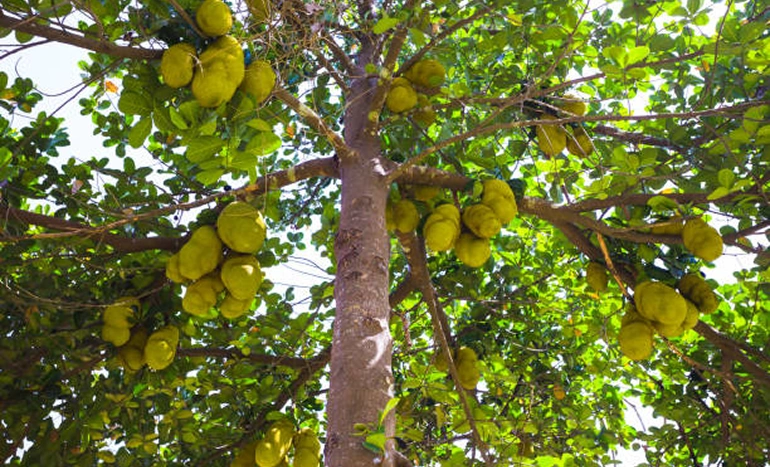
The Jackfruit Tree, scientifically known as Artocarpus heterophyllus, is a large tropical tree native to South and Southeast Asia. It produces the world's largest tree-borne fruit, the jackfruit, which is celebrated for its versatile culinary uses, nutritional value, and sustainability.
01
What are the culinary uses of Jackfruit?
Jackfruit is a versatile fruit used in both savory and sweet culinary preparations. It can be consumed ripe or unripe, cooked or raw, and is used in dishes such as curries, stews, stir-fries, desserts, and even meat substitutes due to its meaty texture.
02
How does Jackfruit consumption contribute to sustainability?
Jackfruit is celebrated for its sustainability as it requires less water, pesticides, and fertilizers compared to many other crops. Additionally, its large size and prolific yield make it an efficient food source, reducing pressure on land and resources.
03
Can Jackfruit seeds be eaten?
Yes, Jackfruit seeds are edible and can be roasted, boiled, or ground into flour for various culinary purposes. They are rich in protein, healthy fats, and micronutrients, making them a valuable addition to diets, especially in regions where Jackfruit is prevalent.
04
Is Jackfruit nutritionally beneficial?
Yes, Jackfruit is a nutritious fruit rich in dietary fiber, vitamins, minerals, and antioxidants. It provides essential nutrients such as vitamin C, vitamin A, potassium, magnesium, and B-complex vitamins, contributing to overall health and well-being.
05
Can Jackfruit be used as a meat substitute?
Yes, unripe Jackfruit has a fibrous, meat-like texture that makes it an excellent vegetarian or vegan alternative to meat. It can be seasoned, shredded, or cooked in various ways to mimic the taste and texture of pulled pork, chicken, or beef.
06
Are there any traditional medicinal uses of Jackfruit?
Yes, various parts of the Jackfruit tree, including the leaves, roots, and latex, have been used in traditional medicine to treat ailments such as diarrhea, fever, asthma, skin disorders, and digestive issues.
07
How is Jackfruit latex utilized?
Jackfruit latex, obtained from the tree's trunk and branches, has adhesive properties and is used in traditional medicine, as well as in industries such as woodworking, bookbinding, and manufacturing of adhesives and sealants.
08
Can Jackfruit wood be used in woodworking?
Yes, Jackfruit wood is valued for its strength, durability, and resistance to termites and decay. It is used in woodworking to make furniture, musical instruments, carvings, and construction materials.
09
What are the different varieties of Jackfruit?
There are numerous varieties of Jackfruit, each with unique characteristics such as size, flavor, and texture. Some popular varieties include Ceylon, Black Gold, Golden Nugget, and Honey Gold, each prized for its distinct qualities.
10
How does Jackfruit cultivation support biodiversity?
Jackfruit cultivation supports biodiversity by providing habitat and food for pollinators, birds, and other wildlife species. Its large, dense canopy creates microhabitats and contributes to ecosystem health and ecological balance.
11
Can Jackfruit trees thrive in subtropical climates?
Yes, Jackfruit trees can thrive in subtropical climates with warm temperatures, moderate humidity, and well-drained soil. They are adaptable to a wide range of environmental conditions and can tolerate occasional frost when mature.
12
Are there any known allergens associated with Jackfruit?
While Jackfruit is generally well-tolerated, individuals with latex allergies may experience cross-reactivity to Jackfruit latex, leading to allergic reactions. It is advisable to exercise caution if you have known latex allergies.
13
What are the environmental benefits of Jackfruit orchards?
Jackfruit orchards provide environmental benefits such as carbon sequestration, soil conservation, and erosion control. Their deep root system helps stabilize soil, prevent runoff, and improve water infiltration.
14
Can Jackfruit be used in natural dyeing processes?
Yes, Jackfruit seeds and bark contain natural pigments that can be used in textile dyeing processes to produce shades of yellow, brown, and green. The use of Jackfruit as a natural dye promotes eco-friendly and sustainable practices in the textile industry.
15
How long does it take for Jackfruit trees to bear fruit?
Jackfruit trees typically begin bearing fruit within 3 to 4 years of planting, although full production may take 4 to 8 years depending on growing conditions, cultivar selection, and tree health.
16
Are there any pests or diseases affecting Jackfruit trees?
Jackfruit trees may be susceptible to pests such as fruit flies, scales, and mealybugs, as well as diseases like anthracnose, leaf spot, and root rot. Integrated pest management practices and proper orchard management can help minimize these issues.
17
Can Jackfruit leaves be used in herbal remedies?
Yes, Jackfruit leaves are utilized in traditional medicine for their medicinal properties. They are brewed into teas, extracts, or poultices and used to treat various ailments such as diabetes, hypertension, inflammation, and skin disorders.
18
How does Jackfruit cultivation contribute to rural livelihoods?
Jackfruit cultivation provides employment opportunities for farmers, laborers, and artisans involved in planting, harvesting, processing, and marketing activities. It generates income and supports livelihoods in rural communities, particularly in tropical regions.
19
Where can one find high-quality Jackfruit products?
High-quality Jackfruit products, including fresh fruits, canned fruits, dried fruits, snacks, and Jackfruit-based meat alternatives, are available from reputable retailers, specialty food stores, and online suppliers specializing in natural and organic products. It is essential to choose products that are sustainably sourced and certified for quality and authenticity.
20
Your Suggestions
Leave your message and we'll get back to you shortly.